

Search Engine Optimization(SEO)
We improve your website’s visibility on search engines through technical enhancements, keyword optimization, and strategic link-building — helping your business rank higher and attract organic traffic that converts.
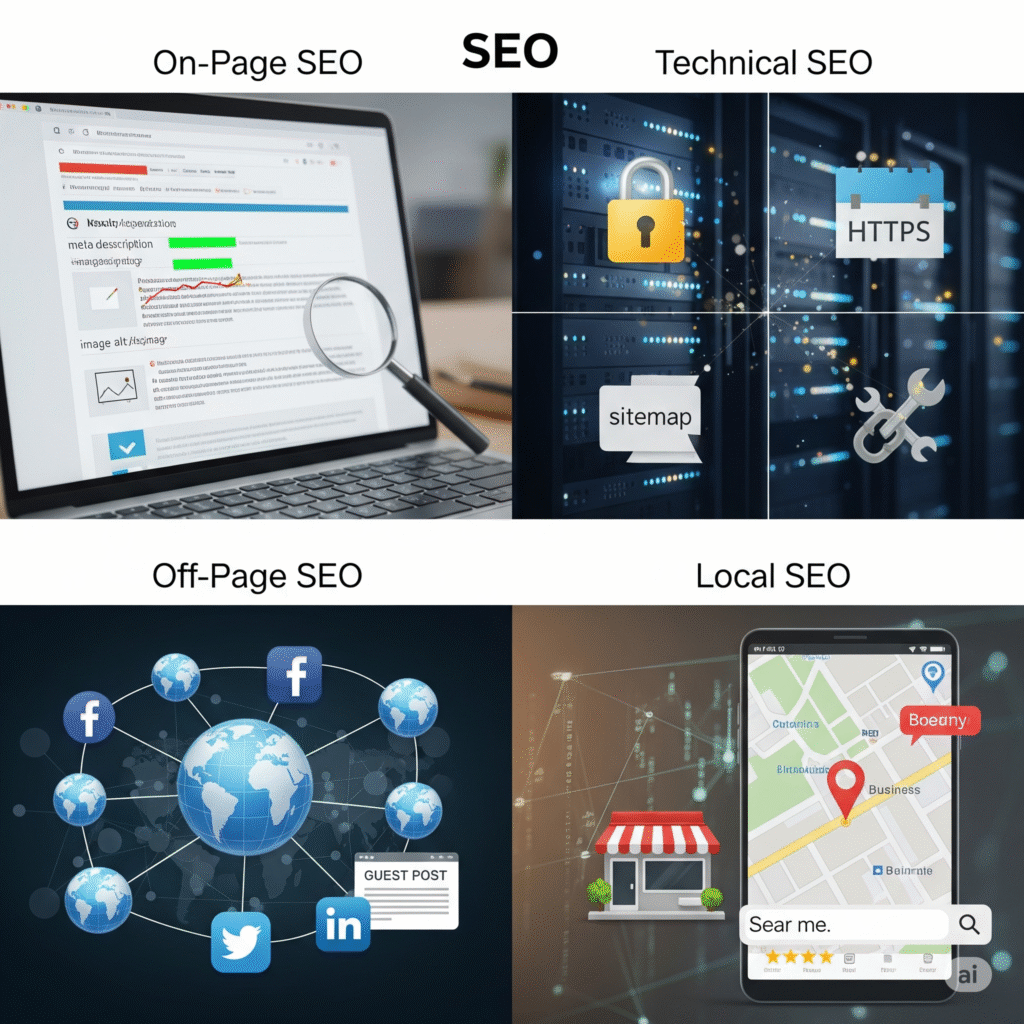
On-Page SEO:
Optimizing meta tags, headings, keyword placement, internal linking, and image alt texts for better rankings.
Off-Page SEO:
Building quality backlinks, guest posting, and directory submissions to boost authority.
Technical SEO:
Improving site speed, mobile responsiveness, schema markup, and fixing crawl/indexing issues.
Local SEO:
Optimizing Google Business Profile, targeting local keywords, and managing reviews to attract nearby customers.
Without SEO, you’re basically invisible to most people searching for what you offer online
Here’s a Friendly Explanation for you
What is SEO?
Search Engine Optimization (SEO) is the process of improving a website so it appears higher in search engine results (like Google, Bing, or Yahoo) when people search for relevant terms.
The main goal: increase visibility, attract more visitors, and ultimately generate more leads or sales—without paying for ads.
Think of SEO like putting up a big, shiny, well-placed sign for your business on the busiest street in town… except the “street” is the internet, and “traffic” means potential customers.
How Search Engines Work?
– Crawling – Search engines send automated bots (“spiders”) to explore websites and gather information about their pages.
– Indexing – The gathered data is stored in a massive database (the “index”) so the search engine knows what’s on each page.
– Ranking – When you search for something, the search engine uses complex algorithms to decide which pages are most relevant and trustworthy, then shows them in order.
SEO’s role:
SEO helps search engines understand your site and see it as valuable and credible—so it’s more likely to show your pages near the top of results.
Main Types of SEO & Examples
a) On-Page SEO – Optimizing elements on your website.
Example: Adding your main keyword “best Italian restaurant in Chicago” in the title, headings, and text naturally.
Writing descriptive meta titles and meta descriptions. Making content easy to read and informative.
b) Off-Page SEO – Building trust and authority outside your website.
Example: Earning backlinks (links from other websites to yours) from reputable blogs, news sites, or partners. Managing your online reputation and encouraging reviews.
c) Technical SEO – Improving the behind-the-scenes structure of your site.
Example: Making your site load faster, ensuring it’s mobile-friendly, fixing broken links, and using proper site architecture. Adding XML sitemaps so search engines can easily index your pages
Real-Life Examples
Local Bakery: Optimizing for “best cupcakes in [city]” can bring local customers searching for nearby dessert shops.
E-commerce Store: Creating category pages optimized for “affordable home office chairs” to capture shoppers searching for that exact product.
Law Firm: Publishing informative blog posts about “steps to take after a car accident” to attract potential clients in need of legal help.
Why People Should Use SEO
Cost-effective – Unlike ads, SEO brings free, ongoing traffic once rankings are established.
Long-term results – A well-optimized site can hold rankings for months or years.
Builds credibility – People trust top search results more than paid ads.
Better user experience – SEO improvements (speed, navigation, mobile-friendliness) also make the site easier for customers to use.
Higher conversion rates – Visitors from search often have high intent (they’re actively looking for your product/service).
Importance of SEO
– 90% of online experiences begin with a search engine.
– 75% of users never scroll past the first page of results.
– Organic search drives over 50% of all website traffic on average.
Still have a question?
If you have any other queries, feel free to reach out to us. Our knowledgeable team is here to help!